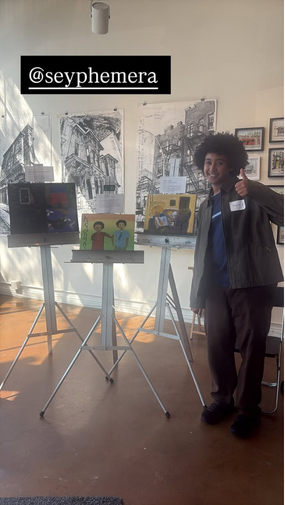
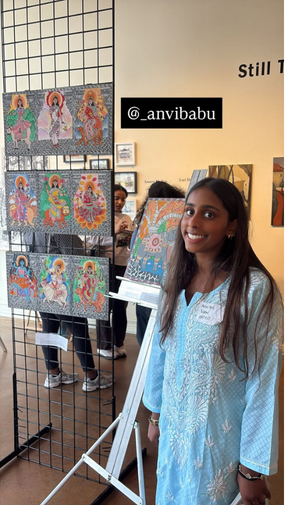
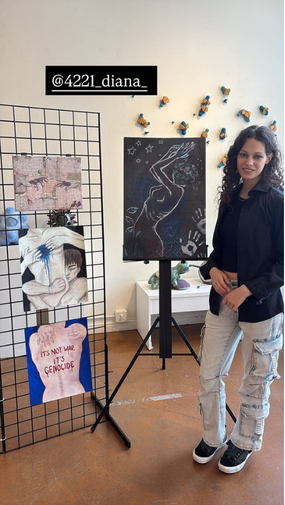
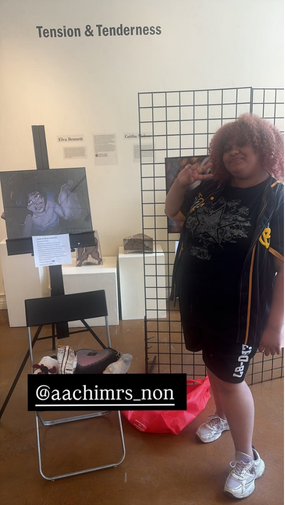
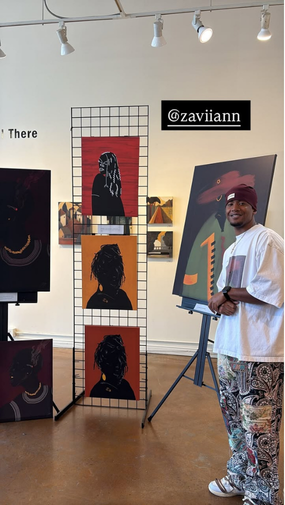
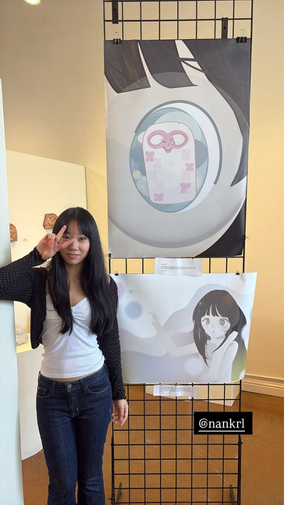
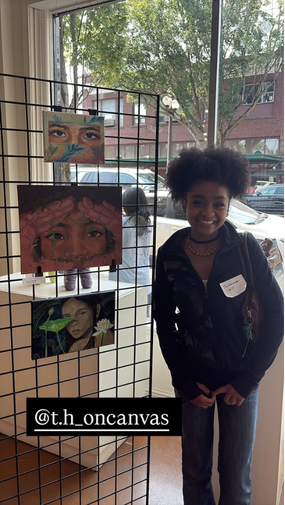
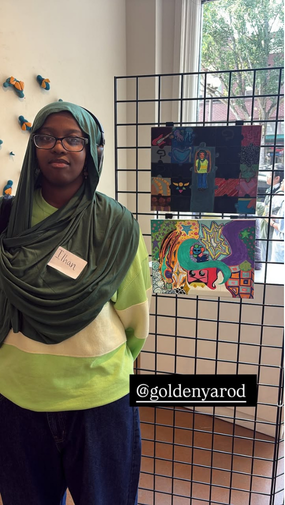
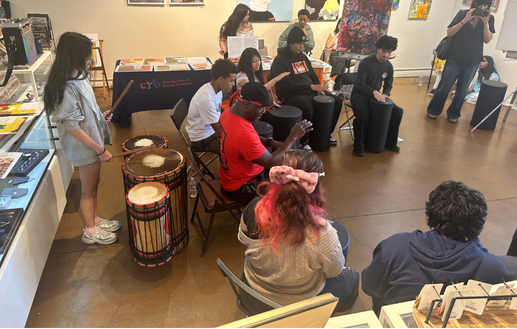
CRB, alongside the Best Starts for Kids Division at Public Health of Seattle & King County, hosted a BIPOC Youth Artistic Showcase and Workshop on August 15th at the Columbia City Gallery in Seattle, celebrating talented youth artists from across King County. It was a great success, with live music, various performances, and a showcase of excellent art from King County youth.
What truly made it a success? The staff and the youth involved in the event thought the BIPOC Youth Artistic Showcase and Workshop did more than just bring people from the community to view art and have a good time. The most important thing that came from engaging in this event was its healing power. Many of the youth artists received joy, validation, opportunities to represent themselves, and self-worth from this showcase.
Alan Tang, Advocacy Coordinator at CRB and an organizer of the event, stated, “I believe that art serves as an important avenue for young people to share their thoughts, stories, and life experiences. I found that when speaking with young people, especially those who are raised in households that have different cultural norms and values, it can be hard to explain the disconnect that they can feel as someone who is caught in-between cultures. It’s something that I relate to as a child of immigrants and is why I found art so impactful. Art can serve as a connection point where young people can both tell the stories that they have always wanted to tell, while also connecting these stories to the cultures, values, people, and experiences that have guided and inspired them.”
So, not only do these young adults get a chance to present their art to their community, but they also have an opportunity to display their culture, emotions, and true self. Having a way to express oneself is inextricably linked to healing from being “othered,” which is increasingly common in the current state of American life.
To get scholarly, a 2025 systematic review of 28 studies found that regular arts and creative engagement was generally linked to better adolescent mental health and wellbeing, with moderate support for a causal relationship (Hugh-Jones et al.). Also, research discussed in a 2024 global review links arts-based approaches with improved self-concept, stress resilience, sleep quality, and overall wellbeing; it also notes potential roles in mental-health awareness, stigma reduction, coping, and recovery. The U.S. National Endowment for the Arts similarly summarizes evidence that arts education can help children and youth cope with emotions, recover from adversity, and develop tolerance and compassion (Golden et al.).
Though we know youth engaging in art improves their mental health from their own words and feedback from this BIPOC Youth Artistic Showcase and Workshop, it is good to have solid research backing up their feelings.
Sources
Hugh-Jones, Sam, et al. “Does Regular Engagement with Arts and Creative Activities Improve Adolescent Mental Health and Wellbeing? A Systematic Review and Assessment of Causality.” SSM – Population Health, vol. 31, 2025, article 101845. https://pubmed.ncbi.nlm.nih.gov/40761439/.
Golden, Tasha L., et al. “Supporting Youth Mental Health with Arts-Based Strategies: A Global Perspective.” BMC Medicine, vol. 22, 2024, article 7, https://doi.org/10.1186/s12916-023-03226-6. PubMed Central, https://pmc.ncbi.nlm.nih.gov/articles/PMC10763059/. Accessed 22 Sept. 2026.

Leave a Reply